
What is PIVOT?

PIVOT2act is an app for disability inclusion, built on research.

What is PIVOT

PIVOT is a digital self-assessment and consulting framework that helps organisations move from compliance to disability-inclusive workplaces. It benchmarks organisational readiness, maps barriers and opportunities, builds a data-driven inclusion roadmap and tracks progress over time.

It was co-created by academics, disability specialists and technologists, and built inside the University of Cape Town before commercialisation. PIVOT makes disability inclusion visible, measurable and actionable.

Why we are doing this

Disability inclusion in South Africa is still largely compliance-driven. Disclosure is low, so data is unreliable, and stigma and gaps in organisational systems continue to create exclusion.

With the 2025 Employment Equity changes and growing ESG expectations, employers are under more pressure to act, but many do not know where to start. PIVOT gives them a structured path to systemic inclusion rather than tick-box compliance.

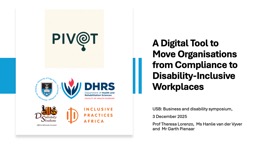
Title slide of the PIVOT symposium presentation

Symposium presentation

A Digital Tool to Move Organisations from Compliance to Disability-Inclusive Workplaces. Presented at the USB Business and Disability Symposium, 3 December 2025, by Prof Theresa Lorenzo, Ms Hanlie van der Vyver and Mr Garth Pienaar.

What PIVOT measures

High-impact behavioural and systems change.

The 5 sectors

  1. Prepare
  2. Integrate
  3. Value-Add
  4. Optimise
  5. Transfer

The 3 dimensions

  • Space
  • Person
  • Culture

Every sector is looked at through all three dimensions. See a sample result ↓

How PIVOT works

  1. Assess

    Staff complete a confidential self-assessment. Anonymous participation is available.

  2. Map

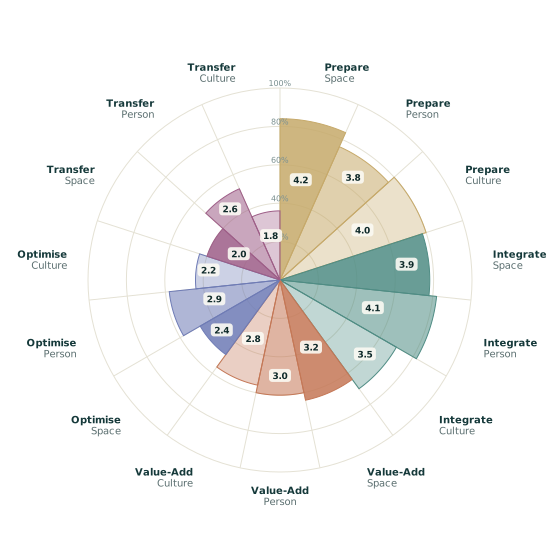
    Results are scored across 15 areas (5 sectors, each with Space, Person and Culture) and shown on a polar chart.

  3. Recommend

    Get recommendations based on your scores and how they change from one assessment to the next.

  4. Track

    Repeat the assessment and watch progress over time.

    Repeat from step 1
  5. Connect

    Link to inclusive recruitment and training, and connect students to workplace pathways.

Polar chart of a sample organisation's scores across the 15 areas. Prepare and Integrate score highest, around 4 out of 5, while Optimise and Transfer score lowest, around 2 out of 5. (opens full size in new tab)
Sample data. Scores across the 15 areas for a fictional organisation. Longer wedges mean stronger results, so gaps are easy to spot.

5 Sectors

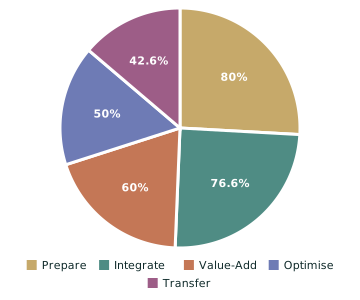
Pie chart of a sample organisation's average score in each of the 5 sectors: Prepare 80%, Integrate 76.6%, Value-Add 60%, Optimise 50% and Transfer 42.6%.
Sample data. The average score for each of the five sectors.

3 Dimensions

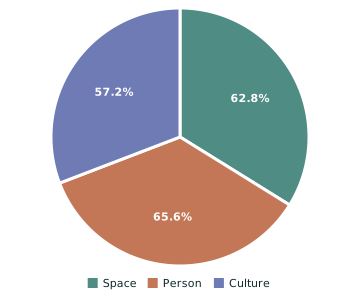
Pie chart of a sample organisation's average score across the 3 dimensions: Space 62.8%, Person 65.6% and Culture 57.2%.
Sample data. The average score for Space, Person and Culture across all sectors.

Who it's for

PIVOT2act also supports

  • Universities

    Few disabled young people in South Africa enter and complete tertiary education, largely because of systemic barriers. PIVOT helps institutions assess how inclusive their spaces, people and culture really are, and plan changes that support transformation goals. It also connects students to workplace pathways. It was built inside the University of Cape Town.

  • Medical schools

    Doctors need to be ready to work with patients and colleagues with disabilities. PIVOT builds on research into disability-inclusive graduate competencies in medical education, and gives faculties a structured way to see where their programmes and environments stand and where to improve.

  • Government & public sector

    Public bodies, including departments and SETAs, can use PIVOT to assess their own capacity for inclusive participation. It follows an asset-based approach grounded in research on opening economic opportunities for disabled youth, and gives clear data for planning and reporting.

  • NGOs & development agencies

    PIVOT gives development organisations a common, evidence-based framework. Use it for your own workplace, or to support the organisations you work with. The same assessment works across sectors, with digital and human support available.

Papers by Theresa and co-authors

Summaries are paraphrased. Each links to the published paper, where the full abstract is available.

Higher education · 2025

Disabled inclusion as a humanising and healing praxis in higher education transformation

Gabriels, Abrahams & Lorenzo · Transformation in Higher Education

Few disabled young people in South Africa enter and complete tertiary education, largely because of systemic and structural barriers. Drawing on disabled students' experiences at the University of Cape Town, the authors argue that inclusion grounded in care and dignity is central to the university's transformation goals.

Read the paper → (opens in new tab)
Medical education · 2025

Disability Inclusion in Graduate Competencies in Medical Education: What Competencies Matter?

Whitehead, Amosun, Lorenzo & Kathard · International Journal of African Higher Education

A doctoral study of how South African doctors currently work with persons with disabilities. Using the ICF framework, focus groups, interviews and a modified Delphi process with disabled people, doctors, students and allied health professionals, it proposes thirteen disability-inclusive competencies and nine sub-competencies for medical graduates.

Read the paper → (opens in new tab)
Public sector · 2016

Enhancing the public sector's capacity for inclusive economic participation of disabled youth in rural communities

Ned & Lorenzo · African Journal of Disability

A case study in a rural Eastern Cape village with disabled youth, family members and public-sector service providers. It examines providers' capacity to open economic opportunities to disabled youth and recommends an asset-based, appreciative approach that frames disability around equal opportunity and active citizenship.

Read the paper → (opens in new tab)

References

  1. Gabriels, S., Abrahams, D. and Lorenzo, T. (2025) 'Disabled inclusion as a humanising and healing praxis in higher education transformation', Transformation in Higher Education, 10, a550. Available at: https://doi.org/10.4102/the.v10i0.550 (opens in new tab)
  2. Whitehead, S., Amosun, S.L., Lorenzo, T. and Kathard, H. (2025) 'Disability inclusion in graduate competencies in medical education: what competencies matter?', International Journal of African Higher Education, 12(1), pp. 133–162. Available at: https://doi.org/10.6017/ijahe.v12i1.20771 (opens in new tab)
  3. Ned, L. and Lorenzo, T. (2016) 'Enhancing the public sector's capacity for inclusive economic participation of disabled youth in rural communities', African Journal of Disability, 5(1), a189. Available at: https://doi.org/10.4102/ajod.v5i1.189 (opens in new tab)
  4. Lorenzo, T. et al. (2019) Working together: making inclusive development a reality. [Publisher and link to confirm]
  5. Gould, R., Mullin, C., Parker Harris, S. and Jones, R. (2022) 'Building, sustaining and growing: disability inclusion in business', Equality, Diversity and Inclusion: An International Journal, 41(3), pp. 418–434. Available at: https://doi.org/10.1108/EDI-06-2020-0156 (opens in new tab)

Bring PIVOT to your organisation

Talk to us about using PIVOT in your institution, department or business.

Contact us